


Teach your dog to think
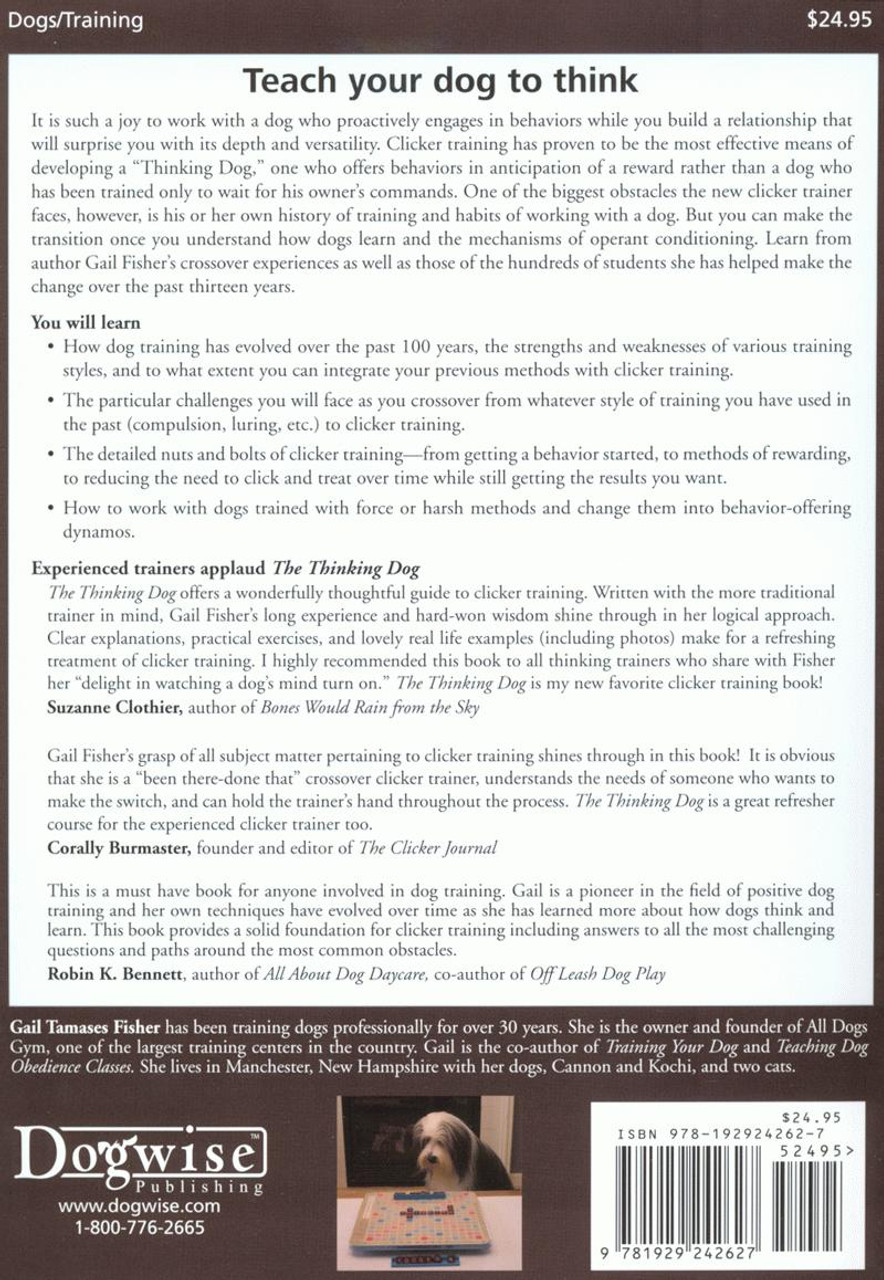
It is such a joy to work with a dog who proactively engages in behaviors while you build a relationship that will surprise you in its depth and versatility. Clicker training has proven to be the most effective means of developing a Thinking Dog, one who offers behaviors in anticipation of a reward rather than a dog who has been trained only to wait for his owner's commands. One of the biggest obstacles the new clicker trainer faces, however, is his or her own history of training and habits of working with a dog. But you can make the transition once you understand how dogs learn and the mechanisms of operant conditioning. Learn from author Gail Fisher's crossover experiences as well as those of the hundreds of students she has helped make the change over the past thirteen years.
You will learn:
How dog training has evolved over the past 100 years, the strengths and weaknesses of various training styles, and to what extent you can intergrate your previous methods with clicker training.
The particular challenges you will face as you crossover from whatever style of training you have used in the past (compulsion, luring, etc.) to clicker training.
The detailed nuts and bolts of clicker training - from getting a behavior started, to methods of rewarding, to reducing the need to click and treat over time while still getting the results you want.
How to work with dogs trained with force or harsh methods and change them into behavior-offering dynamos.
Experienced trainers applaud The Thinking Dog
The Thinking Dog offers a wonderfully thoughtful guide to clicker training. Written with the more traditional trainer in mind, Gail Fisher's long experience and hard-won wisdom shine through in her logical approach. Clear explanations, practical exercises, and lovely real life examples (including photos) make for a refreshing treatment of clicker training. I highly recommended this book to all thinking trainers who share with Fisher her delight in watching a dog's mind turn on. The Thinking Dog is my new favorite clicker training book!
Suzanne Clothier, author of Bones Would Rain from the Sky
Gail Fisher's grasp of all subject matter pertaining to clicker training shines through in this book! It is obvious that she is a been there-done that crossover clicker trainer, understands the needs of someone who wants to make the switch, and can hold the trainer's hand throughout the process. The Thinking Dog is a great refresher course for the experienced clicker trainer too.
Corally Burmaster, founder and editor of The Clicker Journal
This is a must have book for anyone involved in dog training. Gail is a pioneer in the field of positive dog training and her own techniques have evolved over time as she has learned more about how dogs think and learn. This book provides a solid foundation for clicker training including answers to all the most challenging questions and paths around the most common obstacles.
Robin K. Bennett, author of All About Dog Daycare, co-author of Off Leash Dog Play
Gail Fisher has been training dogs professionally for over 30 years. She is the owner and founder of All Dogs Gym, one of the largest training centers in the country. Gail is the co-author of Training Your Dog and Teaching Dog Obedience Classes. She lives in Manchester, New Hampshire with her dogs, Canon and Kochi, and two cats.
Click here to view an excerpt.
What reviewers are saying...
MIDWEST BOOK REVIEW
Written by Gail Tamases Fisher, a professional dog trainer of over thirty years' experience, The Thinking Dog: Crossover to Clicker Training is a guide to using clicker training to develop a "thinking dog" who offers behaviors in anticipation of a reward, rather than a passive dog trained simply to wait for its owner's commands. Someone new to clicker training may find it difficult to break out of familiar routines; The Thinking Dog: Crossover to Clicker Training teaches one how to surpass one's own ingrained habits while learning the nuts and bolts of operant conditioning. "By definition, LLW [loose-leash walking] means there is no tension in the leash. This rule is absolute: Your dog may not pull and be successful. Any time your dog pulls and gets to move forward, pulling is reinforced. So from the moment you start training LLW, any time your dog is on leash, you are either in training, or using equipment that prevents pulling, such as a front-connection harness or head halter. Do not use a Flexi- or bungi-lead as they reward pulling." An excellent, easy-to-use manual for amateur and professional dog trainers alike, handily illustrated with black-and-white photographs. James A. Cox
DOG WORLD
When Gail Tamases Fisher attended her first clicker-training seminar in 1996, she was already a skilled trainer and the author of two books. She had built a successful career on the Volhard motivational method.
I was happy with how I trained for the 20-plus years that I had used and taught this approach, believing it was by far the best way to train for both dogs and people, Fisher writes.
As her skepticism vanished, she began incorporating clicker training into her methodology. She explains her decision in a balanced manner: Nothing in this book is intended to denigrate any approach or diminish your success with whatever training method you have used.
The Thinking Dog details the author's experiences and techniques for basics like using clickers to teach house manners and resolve common behavior problems, as well as advanced training for competitive sports. This is a great book for novice owners and experienced trainers looking for fresh insights, along with anyone else interested in trying clicker training. Fisher discusses pitfalls and potential problems with clicker training, rather than presenting it as one-size-fits-all method. For instance, she notes specific factors that will determine potential success with clicker training, such as the temperament of both dog and trainer, and a trainer's previous methods and prior experience. The book is packed with creative ideas, such as strategies to motivate reluctant dogs that are hesitant to respond to a clicker. However, Fisher's underlying message supersedes any methodology. Clicker training is not just about what we train our dogs to do, but is how we act toward them, how we are with them. It's not just about what we do- the mechanics of training, it's about who we are, she writes.
Her final advice is to simply enjoy the process. At its best, training should transcend rules and become genuine communication. Amy Fernandez
THE APDT CHRONICLE OF THE DOG
The Thinking Dog is guaranteed to be an attention grabber for people browsing at the book store. The cover (a dog sitting in a chair, head tilted, playing a game of Scrabble) makes you want to read it. The book is described as a Training Manual, however I believe that label doesn't do The Thinking Dog justice. A Training Manuel conjures up images of a rather dry, fact-packed read. Not so with this book! Gail Fisher does present the readers with many facts historical, medical, psychological and physiological. However, mixed in with all of this information are anecdotes and opinions based on her vast experiences that are warmly expressed.
The Thinking Dog is a step-by-step instruction on crossing over to clicker training, and much more. For a trainer to crossover from their chosen method to clicker training is a big step. Dog trainers are infamous for being certain that their way is the only and best way. However I never felt pressured by Fisher into converting to a clicker trainer. I felt she was exposing me to wonderful insights into the working of the dog's mind. And she wasn't satisfied with the knowledge of the present but challenges the reader to push themselves and their dogs to new and exciting heights.
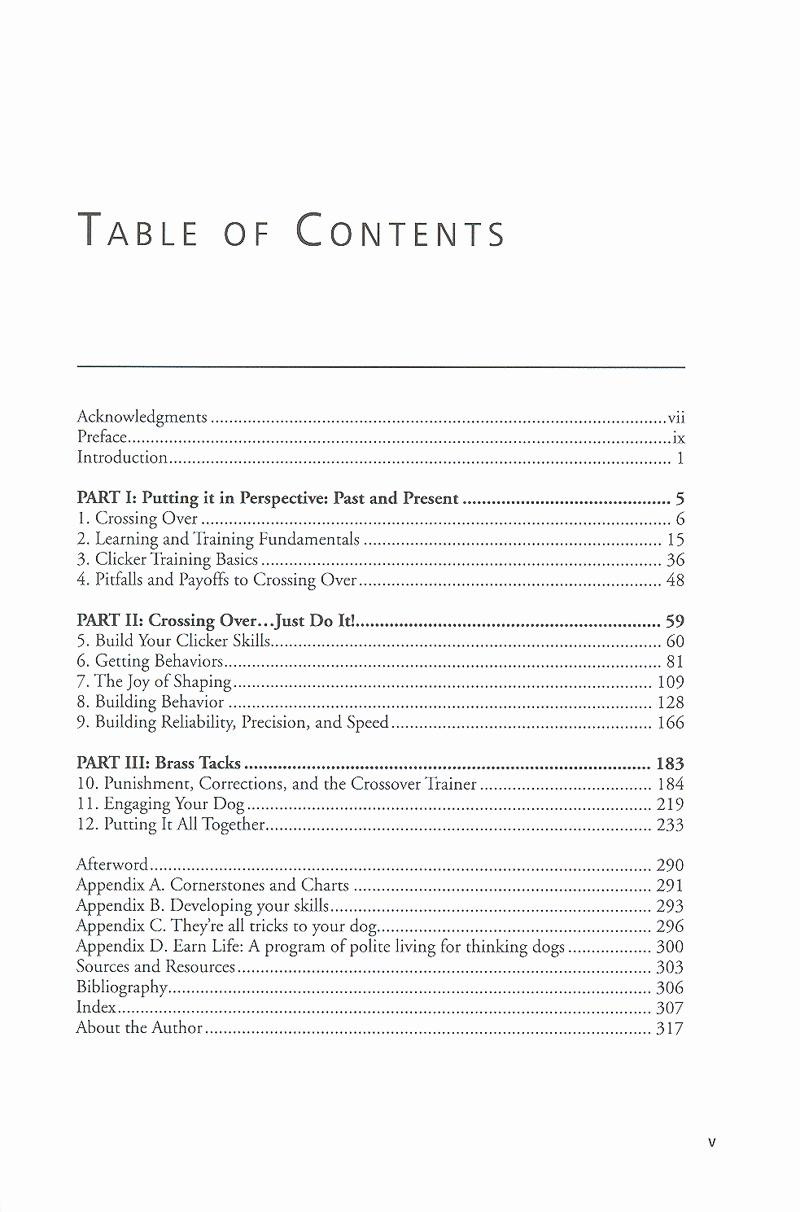
The book is divided into three sections. Part 1 is entitled Putting is in Prospective: Past and Present. The author lays the ground work with an overview of dog training for the past 100+ years up through present day. She then begins with the step-by-step of the fundamentals of clicker training. With the use of charts, photographs and detailed instructions, this would appeal primarily to the studious professional trainer. But with the down to earth entries in My Crossover Journal these facts and figures are translated into warm anecdotes for the non-professional pet owner. The book appeals to both the pet owner and professional dog trainer, just not always at the same time. I did find the often-mentioned references to other parts of the book rather disconcerting (on page 57 commonly asked questions are listed and an answer is listed but the reader is told to go to Chapters 8 and 10 for more detail).
Part 2, Crossing Over Just Do It!, is the soul of the book. It begins with practicing clicker timing skills before starting with a dog and following through with what to do and, most importantly, why it works. Fisher describes shaping very effectively. This could be rather complicated but the author delivers her message in baby steps which makes it easy to follow. I felt she did a good job of appealing to both the pet owner and the professional trainer as I could skim over the very basic parts and absorb the parts that were new to me.
Part 3, Brass Tacks, puts the final touches on clicker training. Fisher offers suggestions of the many directions available through discovering the way your dog's mind works and building on that knowledge. To quote, Remember the adage in the introduction, Give a man a fish, you feed him for a day; teach a man to fish, you feed him for a lifetime. Clicker training provides more than a trained dog it teaches an understanding of how the dog learns and how to teach them to behave the way we want them to.
I strongly recommend this book to current clicker trainers who can improve their technique and learn even more than they already know about the philosophy of clicker training. I also recommend this book to clicker training skeptics because Fisher not only describes the process but, through comparing clicker training with alternate methods, she demonstrates how clicker training appeals to and grows the dog's mind. Pamela Christy
1 Review Hide Reviews Show Reviews
-
Clicker training vs. negative reinforcement
I'm old. I grew up learning to train dogs with negative reinforcement. I taught myself clicker training by reading lots of books and going to hands on seminars and practicing. Not everyone can go through all the hoops I had to go through to become proficient as a clicker trainer. After I read Fisher's book I wished I had read it first. It effectively explained why my old methods worked (after a fashion) and how to transition over to the more effective and faster clicker training. This is the best clicker training book I have read. I breed Havanese. I have recommended this book to every one of my puppy buyers. They find it effective too.